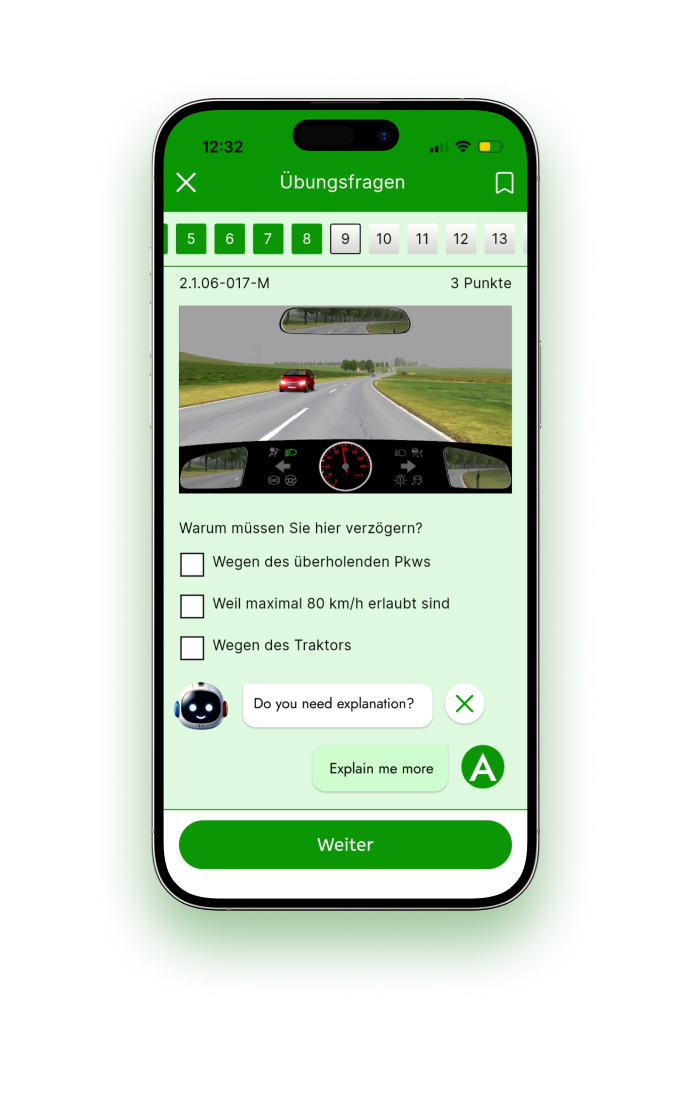
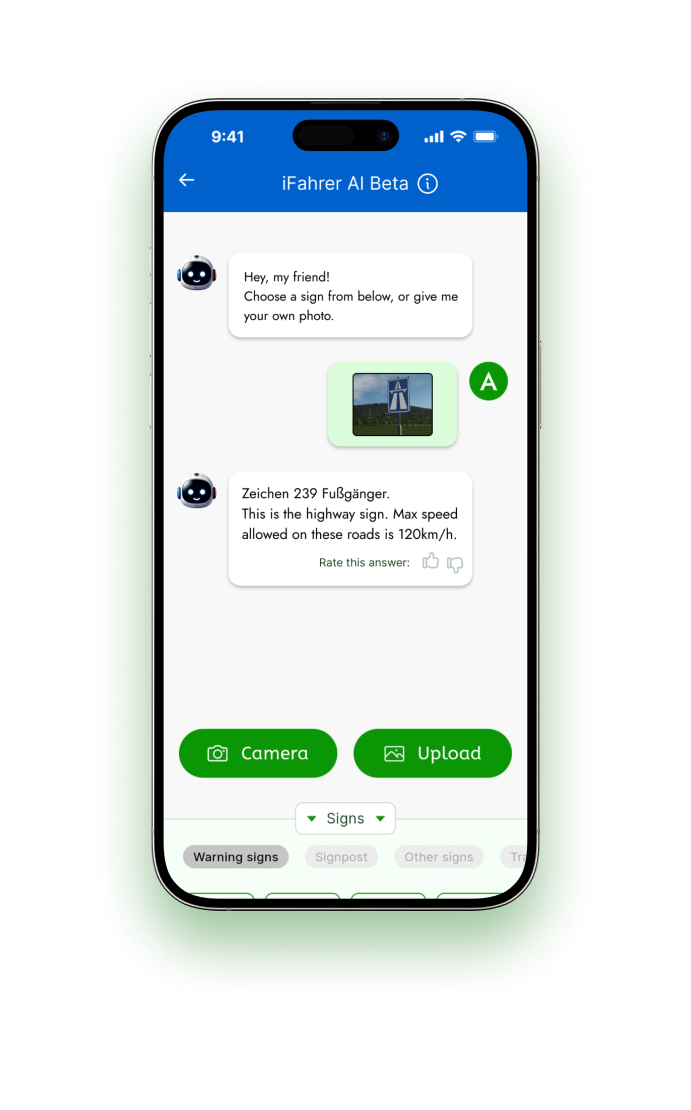
Get ready for your license test with AI assistance!
How does a spring-loaded brake system work?
When the handbrake valve is activated, the spring-loaded brake cylinder is purged of air. The spring power thus activates the brakes
When the handbrake valve is activated, compressed air flows into the spring-loaded brake cylinder. The compressed air thus activates the brakes
When the brake pedal is applied at standstill, compressed air flows into the spring-loaded brake cylinder. The compressed air thus activates the brakes
Here is Our AI Assistant's Explanation
Your answer is correct. In vehicles with a spring-loaded (spring-actuated) brake system—common in trucks and buses—the brakes are held off by air pressure in normal operation. When you activate the handbrake (parking brake), the air is released from the spring-loaded brake cylinder. This release of air allows the powerful spring to expand, which pushes and applies the brakes mechanically. This design ensures that if air pressure is lost (for example, due to a leak), the spring will automatically engage the brakes for safety. So, the brakes are applied not by air pressure, but by the force of the spring when air is released. This system provides a fail-safe if air pressure fails.